

Gujarati food is famous all over the world for its delicious taste, wonderful aromas, and amazing variety. From soft, warm rotlis to steaming bowls of dal and spicy shaak, there is always something tasty to eat. However, many people wonder: "Can I eat Gujarati food every single day and still stay fit and healthy?"
The short answer is a big YES! Traditional Gujarati cooking is naturally full of healthy ingredients. It uses a lot of grains, lentils, fresh vegetables, and yogurt. The key to staying healthy is not about stopping your favorite meals. Instead, it is about choosing the right ingredients, controlling your food portions, and preparing meals in a healthy way.
If you live in New Jersey and want to cook authentic, healthy Gujarati meals, JFK Grocery has everything you need. Located at 3294 JFK Blvd, Jersey City, NJ 07307, our store brings the real taste of India right to your neighborhood. You can find all the fresh vegetables, whole grains, and healthy spices mentioned in this guide at our store or order them directly online through our website or check our updates on Instagram at @jfk_grocery.
Why Traditional Gujarati Food is Good for Your Health
To understand why Gujarati food is healthy, we have to look at what goes into a daily meal. A classic Gujarati plate (thali) is a great example of a balanced diet. It contains carbohydrates for energy, proteins for muscle strength, and fiber for good digestion. Here is why it works so well:
-
High-Fiber Grains: Grains like whole wheat, bajra (pearl millet), and jowar (sorghum) keep your heart healthy and help you stay full for a longer time.
-
Plant-Based Proteins: Lentils like moong dal, tuvar dal, and chickpeas are excellent sources of protein, especially for vegetarians.
-
Healing Spices: Gujarati dishes use powerful spices like turmeric, cumin, mustard seeds, and asafoetida (hing). These help with digestion and boost your body's immune system.
-
Fermented Foods: Items like dhokla and curd are fermented, which means they are full of good bacteria that keep your gut and stomach happy.
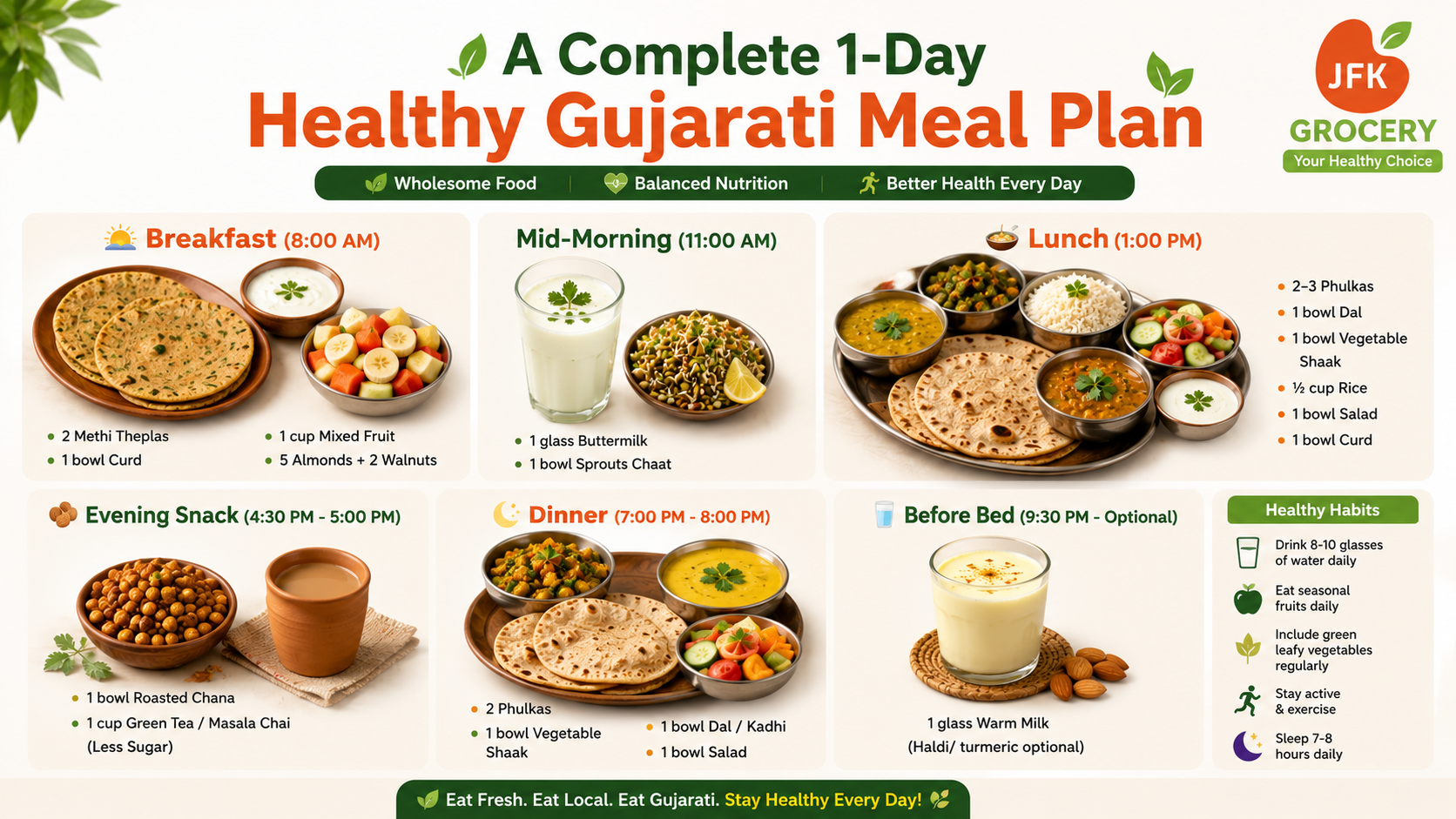
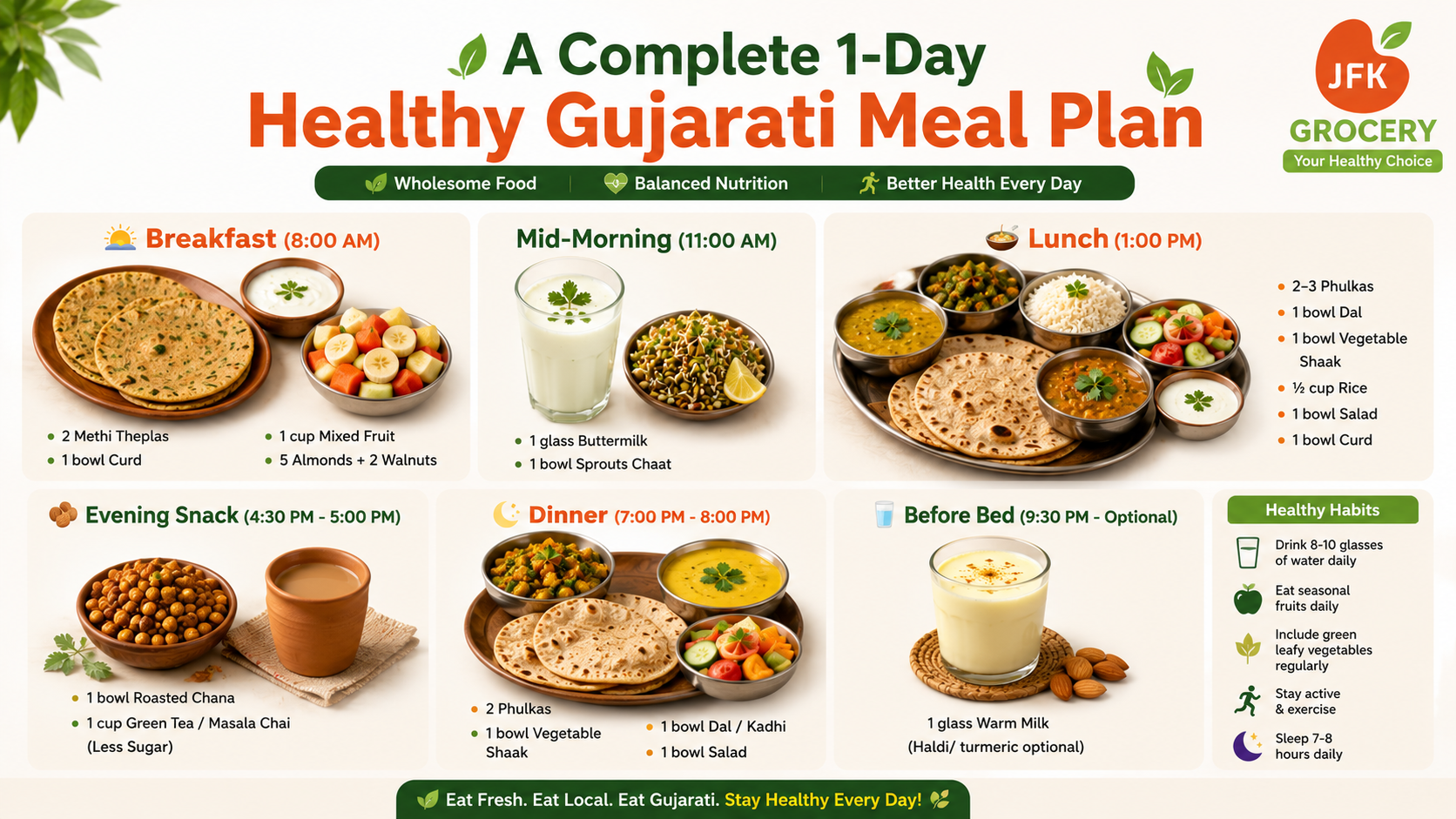
A Complete 1-Day Healthy Gujarati Meal Plan
This simple meal plan is designed for a 35-year-old male who wants to stay fit, active, and full of energy. It provides the right balance of proteins, good fats, and fiber throughout the day.
🌅 Breakfast (8:00 AM)
-
What to Eat: 2 to 3 vegetable phulkas OR 2 soft methi theplas, 1 bowl of fresh unsweetened curd, 1 fresh fruit (like a banana, apple, or papaya), and 5 soaked almonds plus 2 walnuts.
-
JFK Grocery Recommendations:
☕ Mid-Morning (11:00 AM)
-
What to Eat: 1 glass of fresh, low-fat buttermilk (chaas) or sweet coconut water. This keeps you hydrated and cools down your stomach.
-
JFK Grocery Recommendation: Use Lactaid 100 Reduced Fat Milk to prepare delicious, light homemade chaas.
🍛 Lunch (1:00 PM)
-
What to Eat: 2 to 3 soft phulkas (roti), 1 bowl of traditional Gujarati dal or yellow moong dal, 1 bowl of cooked green vegetables (like bhindi, dudhi, tindora, cabbage, or spinach), 1 bowl of fresh crunchy green salad, ½ cup of cooked Basmati rice, and 1 bowl of curd.
-
JFK Grocery Recommendations:
-
Pick up your favorite green items from our fresh Vegetables Collection.
🥜 Evening Snack (4:30 PM - 5:00 PM)
-
What to Eat (Choose One):
-
A small bowl of dry roasted chana.
-
Healthy sprouts chaat (made with boiled whole moong, chopped onions, tomatoes, and fresh lemon juice).
-
A small handful of roasted peanuts.
-
One fresh seasonal fruit.
-
JFK Grocery Recommendations:
-
Laxmi Whole Moong (2lb) (perfect for sprouting!)
🌙 Dinner (7:00 PM - 8:00 PM)
-
What to Eat: 2 lightweight phulkas, 1 bowl of fresh green vegetable dish, 1 bowl of warm dal or comforting Kadhi Pakoda, and a plate of raw salad.
-
JFK Grocery Recommendation: For a fast and comforting option, try Haldiram's Minute Khana Kadhi Pakoda (300g).
🥛 Before Bed (9:30 PM - Optional)
-
What to Eat: 1 glass of warm milk without any added processed white sugar.
-
JFK Grocery Recommendation: Grab a jug of Amul Gold Milk (1 Gallon) for a peaceful night's sleep.

Your Weekly Grocery Checklist: Foods to Eat Every Week
To keep your body healthy and your mind fresh, you need a good variety of nutrients. Try to include these food groups in your kitchen shopping list every single week:
-
Lentils & Dals (5 to 7 times a week): High in vegetarian protein. Stock up on moong dal, toor dal, and masoor dal.
-
Fresh Sprouts (3 to 4 times a week): Excellent for energy and digestion. You can easily sprout whole moong at home.
-
Fresh Paneer (2 to 3 times a week): A great source of calcium and protein. Try Nanak Malai Paneer (12oz) for quick meals.
-
Seasonal Fruits (Every single day): Eat fruits like bananas, apples, or seasonal berries instead of sugary processed sweets.
-
Green Leafy Vegetables (4 to 5 times a week): Use spinach, cabbage, methi, and tindora to make delicious, low-oil side dishes.
-
Millet Rotlas (2 to 3 times a week): Instead of wheat, try ancient grains like bajra or jowar. They are gluten-free and packed with iron. Grab Vadilal Bajro Rotla (5 pieces) for a quick option.
-
Khichdi (1 to 2 times a week): The ultimate comforting Gujarati dinner. It is very light on the stomach and easy to digest. You can enjoy Vadilal Shahi Khichdi when you are short on time.
-
Handvo or Dhokla (1 to 2 times a week): Steam-cooked, fermented snacks that are great for your stomach health. Try Gits Khatta Dhokla (500gm) for a perfect evening treat.
⚠️ Foods to Limit & Avoid
While Gujarati food has many healthy choices, some traditional snacks are deep-fried and contain too much salt or sugar. You should limit these items to special occasions or eat them very rarely:
-
Fried Snacks: Fafda, Gathiya, Bhajiya, and Kachoris are fried in oil. They can lead to weight gain and heart problems if eaten daily.
-
Sugary Drinks & Excess Sweets: Soft drinks, sodas, and excess Indian sweets like jalebi raise blood sugar levels quickly and add empty calories. Avoid products like Sprite 12 oz and items from the general Sweets Collection on a daily basis.
-
Heavy Oil and Ghee: Try to use only 1-2 teaspoons of oil or ghee per meal when cooking. Heavy oil slows down digestion and adds unnecessary weight.
5 Simple Habits for a Healthier Life
Eating healthy food is only one part of staying fit. To get the best results from your balanced Gujarati diet, combine it with these active lifestyle habits:
-
Walk Daily: Take a brisk walk for 30 to 45 minutes every day. A walk after your dinner is great for digestion.
-
Do Some Strength Training: Try to lift weights, do push-ups, or practice simple bodyweight exercises 2 to 4 times a week. This keeps your muscles strong and boosts metabolism.
-
Drink Enough Water: Keep a water bottle with you and drink at least 2.5 to 3 liters of water throughout the day.
-
Prioritize Sleep: Your body repairs itself when you sleep. Aim for 7 to 8 hours of quiet, restful sleep every single night.
-
Eat Dinner Early: Finish your last meal at least 2 to 3 hours before going to bed. This prevents acid reflux and helps you sleep much better.
Frequently Asked Questions (FAQs)
1. Is Gujarati food high in sugar? Is it bad for weight loss?
Some traditional Gujarati families add a little sugar or jaggery (gor) to their dals and vegetables. While a tiny pinch of jaggery is fine, you can easily cook without it if you are trying to lose weight. Traditional Gujarati food is not naturally bad for weight loss; you just need to avoid fried snacks and control your roti and rice portions.
2. Can I eat Methi Thepla every day?
Yes, you can! Methi (fenugreek) leaves are excellent for controlling blood sugar and helping digestion. However, make sure you cook them with very little oil or ghee on the tawa. When prepared with minimal fat, thepla is a fantastic and highly nutritious breakfast option.
3. How do I get enough protein on a vegetarian Gujarati diet?
It is very easy to meet your protein needs! Include a bowl of lentils or dal with every lunch and dinner. Eat Greek-style yogurt or fresh paneer regularly. For snacks, choose roasted chana, peanuts, or fresh sprouts. These foods will give you plenty of protein to stay strong and healthy.
4. Is Basmati rice healthy for lunch?
Yes, Basmati rice is healthy when eaten in the right portion. Half a cup of cooked Basmati rice along with dal, a lot of green vegetables, and salad makes a perfectly balanced lunch. Try not to eat large plates of plain rice without any vegetables.
Conclusion
Eating healthy does not mean you have to say goodbye to your favorite traditional foods. By making simple changes—like choosing whole-grain phulkas, adding more green vegetables, limiting deep-fried snacks, and keeping an active routine—you can enjoy the amazing flavors of Gujarat while maintaining a healthy lifestyle.
Ready to start your healthy eating journey today? We invite you to visit us at JFK Grocery in Jersey City! We stock the finest, freshest, and most authentic Indian ingredients to help you and your family eat well and feel great every day.
Store Location & Information:
-
📍 Address: 3294 JFK Blvd, Jersey City, NJ 07307
-
📞 Phone: 201-456-5474
-
📸 Instagram: https://www.instagram.com/jfk_grocery/